As we celebrate the Platinum Jubilee of HM Queen Elizabeth, the WCB recently talked to John Snipe of Earlswood CC. John describes himself as “a very young 86 year old” and in our latest Q&A he shares the following
- Memories of the Queen’s accession to the throne 70 years ago
- Personal recollections of playing cricket in 1952 and the subsequent establishment of a junior section at Earlswood CC
- His thoughts on how the game has developed over the last 70 years in the West Midlands.
John was a talented cricketer himself and then devoted himself to coaching, setting up and then running the junior section at Earlswood CC for 25 years. His is also a recipient of a WCB Lifetime Achievement Award and an ECB OSCA.
John, let’s start with the Queen’s Platinum Jubilee. What are your recollections of her accession to the throne in 1952 and of playing cricket at that time?
I was 16 years old in 1952 and at that time I was playing adult cricket for St Paul’s Athletic Cricket Club in Kings Heath. In those days, the youngsters hung around while games were on, fetching the balls from people’s gardens and hoping one day someone would ask them to play. We all just wanted to be part of the game, but there was nothing like a youth development policy. It was a difficult time for cricket clubs as most people were working and there wasn’t the time or resources for junior coaching.
I remember vividly when the King died, and everything was put on hold. No one thought of anything else for several weeks and certainly no cricket was played. All cricket clubs paid their respects, and nobody played cricket until the King was laid to rest. It was a sad time with the loss of the King and Princess Elizabeth, as she had been, coming home from her tour. I remember the photos in the newspaper of the Queen looking very sad as she came home.
A lot of cricket at that time was played in public parks. On Billesley Common, for example, at the weekends there would be four or five cricket matches taking place at once. Families would come to watch and that is how they would get interested in cricket. The same happened in Kings Heath Park, where you would find many families watching cricket together. The County Councils played an important role by allowing the parks to be used for cricket so that it was accessible for everyone to watch and gain an interest in the game.
What other teams did you play for in your playing career?
A lot of cricket teams at that time revolved around businesses and the workplace. There was a hugely competitive cricket tournament in the West Midlands amongst the building trade. I played for Readymix Concrete and I remember how much their owner wanted to win that trophy. I also remember the crisp £5 note I was given when we did win it!
For other workplace cricket teams, I played for Woolworths, for various BBC teams and I was also the captain of the Selly Oak Hospital team. It was through playing for the Birmingham YMCA team, however, that I met the great Rachael Heyhoe Flint. I am very proud to be one of the few gentlemen who played both with and against Rachael. It was always much better to play on her side rather than against her, as she was an impressive cricketer.
Rachael Heyhoe Flint was always a good friend to the YMCA and through her work there she introduced many many people to the game. My daughter Sally and I will never forget the time at the YMCA ground when Rachael Heyhoe Flint asked Sally (who was probably around 11 at the time) to play in her team as they were a player short. Sally still has the skirt that Rachael gave her to wear for the match!
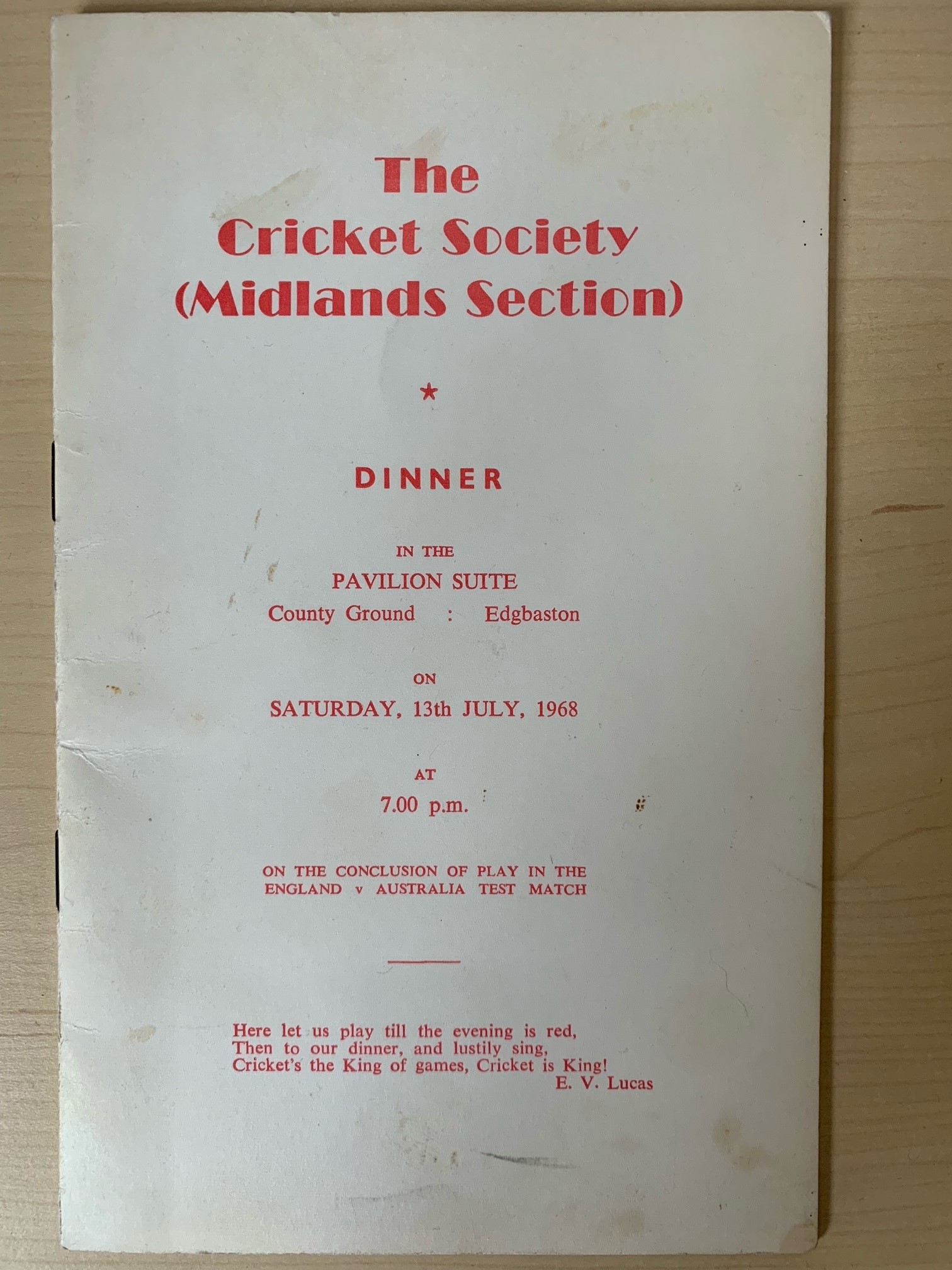
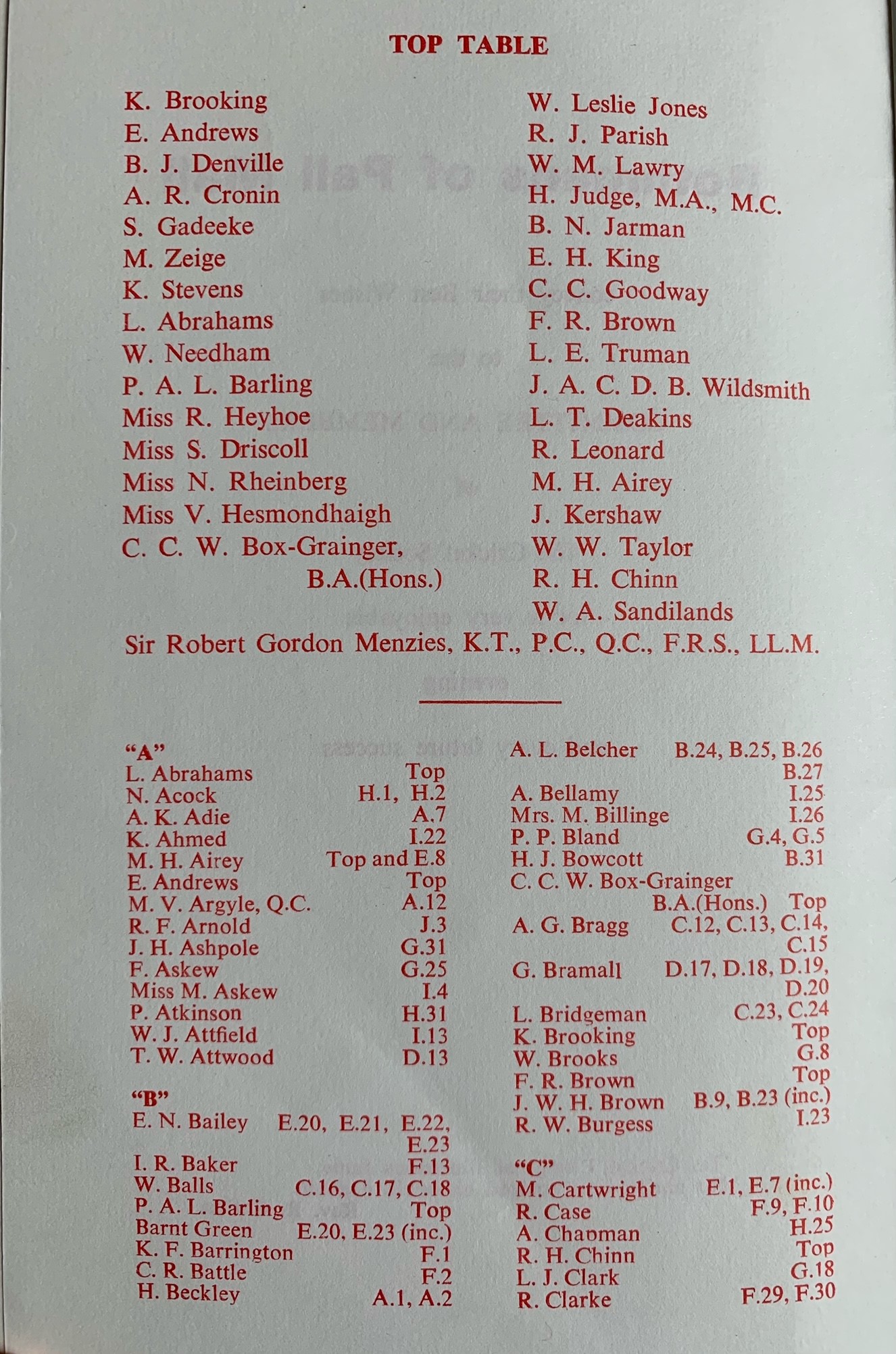
Rachael Heyhoe Flint was also present at The Cricket Society (Midlands Section) dinner I attended at Edgbaston in 1968, after the Edgbaston Ashes Test. The attendance list shows it was a gathering of many powerful influences in West Midlands cricket, of whom Rachael was one. I have never met someone who impressed me as much as she did and achieved so much with so little resources. When I moved into coaching, Rachael Heyhoe Flint was instrumental in encouraging me to consider developing girls’ cricket too.
Can you tell us more about your move into coaching and setting up the junior section at Earlswood CC?
For many years, like other clubs, Earlswood CC never dreamt of developing a junior section. We have the local vicar to thank for setting off a chain of events that led to the formation of the junior section at Earlswood. The vicar lived close to the ground and one day he was knocked off his bike by boys messing around with a cricket ball at the edge of the ground. He was very angry and he asked who was in charge of the boys. The truth was that no one was in charge of them - so the vicar gave Earlswood CC £1,000 to start a junior section, which I was in charge of for 25 years.
Earlswood CC has also had a strong tradition since then in developing girls’ cricket. This is because when the Arch Deacon of Birmingham and Rachael Heyhoe Flint found out about the vicar’s £1,000 donation, they then organised a further £1,000 donation to start a girls’ section. This was very typical of Rachael Heyhoe Flint – she was responsible for the development of girls’ cricket at so many clubs. I will never forget what she did for women’s cricket. She would always ask me if we were developing the girls and would say to me, “Don’t forget, John, girls love cricket too.”
We started off the junior section 34 years ago with four little boys and grew it relatively quickly to over 100 children. Friends brought friends and word spread through the community. It took some perseverance to get others in the club to believe in the benefits of coaching junior players. After a while, they realised the junior section was a pool of players they could begin to draw on for the adult teams. I remember the first time the Earlswood team captain came over and asked me “Can any of this lot play for me?” I told him to go and ask them and find out!
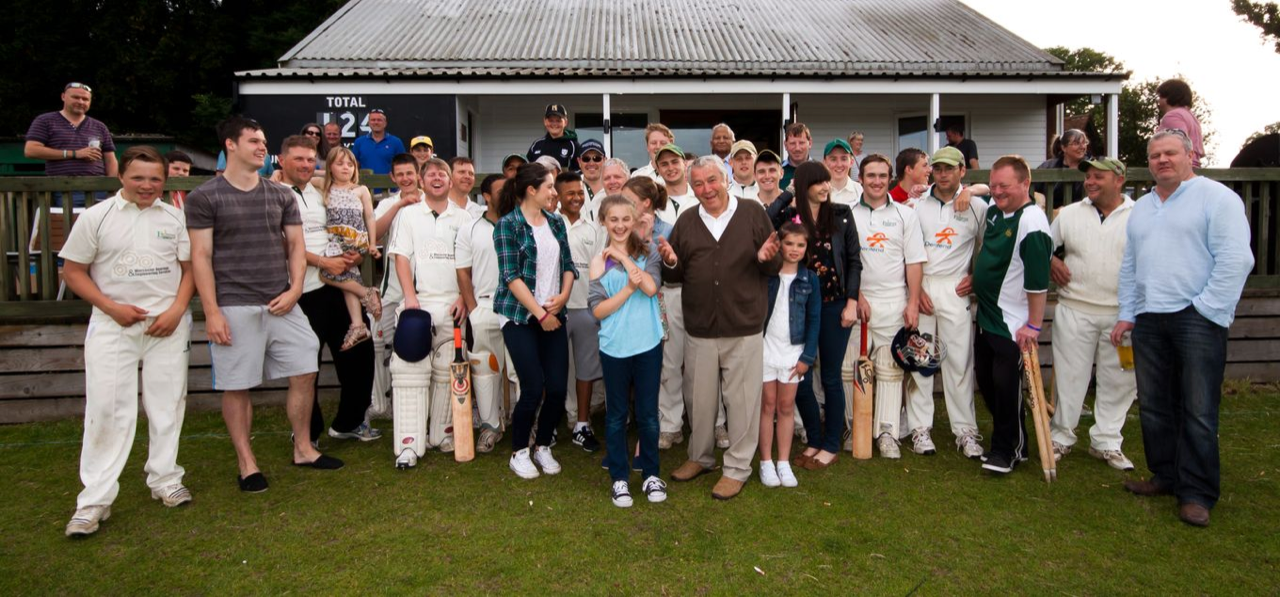
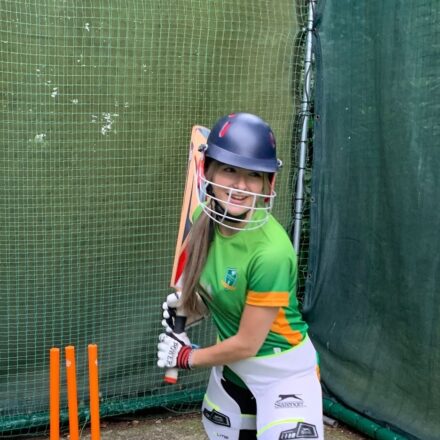
All those junior players have grown up to be lovely adults and friends for many years, including the girls. When you are lucky enough to get players like Marie and Sian Kelly, Amy Weir and Emily Perrin, it’s a joy to be coaching them. One of my proudest moments was just last Saturday when 31 of my original juniors were playing in the five Earlswood adult teams.
Who were the important influences for you as a coach?
In addition to Rachael Heyhoe Flint, it has to be the great Neal Abberley. We were good friends and he would always come down to Earlswood to give me advice whenever I needed it. He was instrumental in helping the club to bring junior cricket on. The best advice Neal ever gave me was this – “You make sure, John, that they enjoy the sessions so much they want to keep coming back, and that next week they’re tugging on their parents’ shirts to bring them along.”
Neal Abberley’s influence on the junior game (as well as the senior game) was huge. He was a great listener too. Neal would listen to what you had to say and then give you a considered answer. He was a magnificent coach, with great attention to detail. I remember him once telling me I shouldn’t be coaching the juniors dressed in my ‘civvies’ and he went and found me a tracksuit so I looked the part. I can still remember him teaching the children the 4 H’s – the ball is Hard, if it Hits you it will Hurt and you might go to Hospital – so you need to use your 2 Eyes and 2 Hands to avoid that happening!
I think ‘The Cricketer’ magazine also deserves a lot of credit for its interest in village cricket over the years. The Cricketer really helped the growth in village cricket and for clubs like Earlswood CC to become thriving parts of the community with junior sections, when their grounds could so easily have been sold to build houses.
Through the Neal Abberley connection, Warwickshire CC teams over the years have always supported the club. Every year, players would come down to our awards night and present the prizes. I remember Nick Knight and Ashley Giles once having an argument about who was going to present the John Snipe trophy! At the Warwickshire Cricket Board, I have to mention Ed McCabe. Ed has been instrumental over the years in the development of junior cricket. Despite gaining new responsibilities, his interest in junior club cricket has never faded and he should be applauded for his positive influence on coaching and the administration of the game in Warwickshire.
Coaching has always been important to me. It’s something I have wanted to do to introduce the game I love to other people. Coaches can give an injection to the game of cricket. It’s like planting a tomato seed – you plant a tiny seed and after a while it produces an abundance of fruit.